
Collecting and purifying water in a crisis situation
In a crisis situation, access to clean water can be life-saving. This guide will help you find, collect and purify water to ensure you and your family have enough drinkable water. Go through the list below and see what you already have at home. If you need to supplement, you are welcome to visit mylar.se
1. Where can you find water?
-
Natural sources: Streams, rivers, lakes, rainwater and springs can provide water.
-
Household resources: Water tanks, water heaters, swimming pools, toilet cisterns
-
Other sources: Snow and ice (melted before use).
2. Water collection
-
Use clean containers, such as cans, buckets or bottles.
-
Collect rainwater by placing containers or directing it from gutters. Put up clean tarps and tarpaulins when it rains. (Boil if you are going to drink it)
-
Melt snow and ice, but remember that it produces less water than expected.
-
Filter out visible particles by pouring the water through a cloth or coffee filter before filtering through your water filter. This will make it go faster and the water filter will last longer.
3. Water purification
Boiling
-
Boil the water for at least 1 minute (3 minutes at high altitude).
-
It should boil really well, Big bubbles No troubles!
-
Let it cool before consumption.
Chemical purification
-
Chlorine: Add 2 drops of chlorine per liter of water, wait 30 minutes.
-
Iodine: Use 5 drops of iodine per liter, let stand for at least 30 minutes.
-
Water purification tablets: Follow the manufacturer's instructions.
Filtration
-
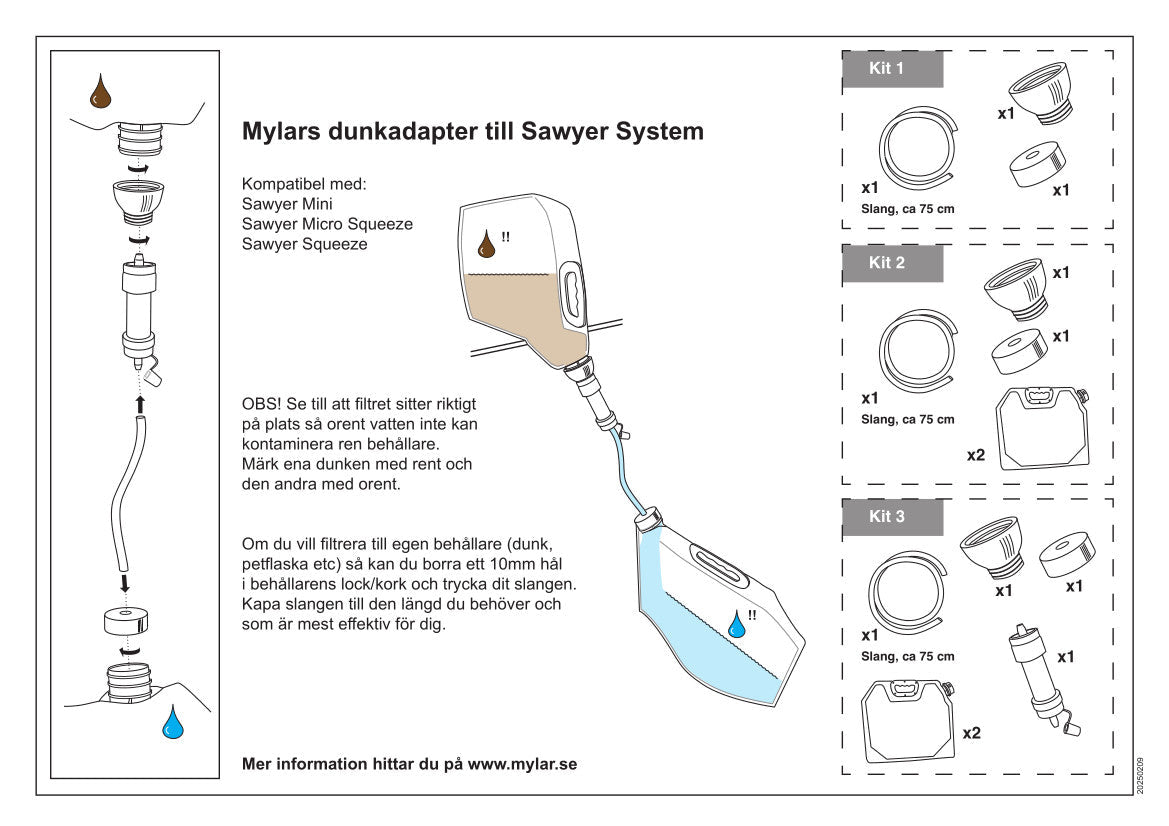
Sawyer Mini or similar filter: Removes bacteria and protozoa .
-
Homemade filter: Sand, charcoal and gravel in a bottle can work as a simple filter solution. Place a cloth between each layer. Boil the water before drinking it.
UV purification
-
The solar method: Place transparent PET bottles in direct sunlight for at least 6 hours.
4. Water storage
-
Use food-grade cans.
-
Store in a dark, cool space.
-
When changing water about 1-2 times a year, clean the can with water and chlorine or vinegar.
- Chlorine mixed 1/4 teaspoon per liter of water
- Vinegar 24% 1 dl per liter of water. (for 12% vinegar take 2 dl of vinegar per liter of water)
- Fill the can and let stand for at least 30 minutes
- Rinse thoroughly before refilling with clean water.
- The same solution can be used to clean multiple cans. -
Label the cans with the date and rotate the water every six months.
-
Prepare containers so you can collect all the rainwater you can once it rains.
5. Water management
-
Ration water if necessary.
-
Use water several times, such as dishwater for flushing toilets.
-
Avoid drinking water unnecessarily, prioritize necessary intake.
Having a plan for how to find and purify water can be crucial in an emergency situation. Prepare in advance by having equipment and knowledge ready!